
Voices in Health Sociology, Vol. 1, No. 3
This blog is the experience and observations of the ESHMS Research Visit Grant Holder Roberto Giosa.
Listening to what happens beyond the vaccine
I arrived at the CHU de Québec–Université Laval in June 2026 for a three-month stay funded by the ESHMS Research Visit Grant and was hosted by Professor Eve Dubé. The stay provided an opportunity to examine vaccination from two perspectives. One brought me into the field, interviewing Spanish-speaking seasonal agricultural workers, mainly from Guatemala, employed in Québec’s poultry and livestock sector about vaccination against avian influenza. The other took me back to the literature through a meta-ethnography on emotions and vaccination.
The matter of information
Information is not helpful if it cannot be understood (Dionne et al., 2023). This problem extends beyond language. Many workers arrive with limited knowledge of how Québec’s healthcare and labor systems function. Information about health services, workplace rights, and procedures is often acquired through experience: by getting sick, being injured, asking a colleague, or learning from workers who have returned for several seasons. Workers who have been coming to Québec for years or who are connected to established networks and organizations supporting agricultural workers may therefore have more points of reference than newcomers.
Healthcare in practice
Another issue that emerged from the interviews was the absence of a family doctor, a situation that is common in Québec, where many residents do not have one. For workers accustomed to having a doctor as the first point of contact for health concerns, the lack of this relationship can create an important gap. A family doctor is not only someone who diagnoses and treats illnesses; they can also explain the healthcare system, answer questions, and help patients decide when and where to seek care. Without this relationship, workers often have to navigate the system independently.
Several participants described long waiting times in healthcare facilities as a reason for delaying or avoiding care-seeking. One participant recalled waiting approximately 24 h for a cast after a fracture, while another explained that obtaining documentation related to sick leave could take months. These experiences also shape people’s perceptions of vaccination. It is difficult to trust that a vaccine will protect you when the same system has already made you wait 24 hours for a cast.
Workers call for in-person information
How can vaccination information be improved? The answers from the participants were remarkably consistent: talk to people rather than simply giving them something to read. When I asked participants whether information in Spanish would be more effective as a poster in the workplace or as a face-to-face session, they generally answered that a conversation or information session is much better. Why? Because a poster does not necessarily establish trust. For people who are otherwise disconnected from the healthcare system, conversations are a way of making contact with it. As some of them explained, there is no certainty about who produced, published, or placed the content.
Therefore, information could be brought directly to workplaces and farms through short, face-to-face sessions in Spanish with trusted intermediaries, where possible. This direct, interactive approach also echoes recent vaccination communication interventions developed in Québec in a school-based vaccination program (Dionne et al., 2024). This would likely require a larger initial investment given Québec’s vast distances, but it could be seen as an investment in a future influenza vaccination campaign targeting this population.
Being a Migrant: Different Circumstances, Shared Problems
None of these experiences exist in isolation. The workers in this study came to Québec under formal work permits, generally had access to decent housing, often with an individual room, and had regular access to the healthcare system. In other words, they were not undocumented and had a relatively secure position in the host country. Yet, even under these conditions, they described difficulties in understanding and navigating the systems around them.
This comparison is important not because Québec, Spain, and Italy have identical agricultural or migration systems, but because it helps us think about how legal and social conditions may shape access to health. If workers with regular status and relatively stable living conditions struggle to obtain and understand health information, these difficulties may be even more significant for migrants in more precarious situations. Research on migrant vaccination in Europe has identified language barriers, difficulties accessing healthcare, and weaknesses in communication as important determinants of vaccine uptake (Crawshaw et al., 2022). Research on migrant agricultural workers in Spain and southern Italy similarly describes precarious living and working conditions and difficulties in accessing healthcare and other social resources (Lamberti-Castronuovo et al., 2021; Villa-Cordero et al., 2025).
Access to vaccination is influenced not only by individual attitudes but also by the conditions under which migrants obtain information, access healthcare, and exercise their rights. These conditions, which can differ significantly between countries, play a crucial role in determining whether individuals can make informed health decisions.
Beyond “vaccine hesitancy”
My second project during my stay has taken me in a different direction: a meta-ethnography examining emotions and vaccination. This is a qualitative literature review that I am conducting with colleagues from the CHU de Québec–Université Laval group and the Department of Sociology at the Universidad de Oviedo. I am interested in what people actually feel during vaccination encounters, whether they are receiving a vaccine, administering one, or making decisions for their children to be vaccinated.
This study reinforced the same intuition from the fieldwork: vaccination decisions cannot always be reduced to whether someone “trusts vaccines” or is “hesitant”.
Fear, uncertainty, frustration, trust, responsibility, and practical constraints can all become part of the same decision. In the case of migrant agricultural workers, vaccination may intersect with language, transportation, employment, access to healthcare, and concern about maintaining future work opportunities.
These are not simply attitudes towards vaccines. They are experiences of navigating systems.
What I am taking home
However, one lesson is already becoming difficult to ignore: access to understandable health information is itself a form of access to healthcare. In practice, this means that many of these workers do not know who their first point of contact is or who they can turn to for information or help with their everyday health needs.
The question, then, may not simply be why some people hesitate to get vaccinated. We should also ask: what opportunities have people had to receive information they can understand, trust, and act upon, and how do the emotions that emerge from these experiences shape the way they make sense of vaccination?
References
Crawshaw, A. F., Farah, Y., Deal, A., Rustage, K., Hayward, S. E., Carter, J., Knights, F., Goldsmith, L. P., Campos-Matos, I., Wurie, F., Majeed, A., Bedford, H., Forster, A. S., & Hargreaves, S. (2022). Defining the determinants of vaccine uptake and undervaccination in migrant populations in Europe to improve routine and COVID-19 vaccine uptake: A systematic review. The Lancet Infectious Diseases, 22(9), e254–e266. https://doi.org/10.1016/S1473-3099(22)00066-4
Dionne, M., Sauvageau, C., Etienne, D., Kiely, M., Witteman, H., & Dubé, E. (2024). Development of Promising Interventions to Improve Human Papillomavirus Vaccination in a School-Based Program in Quebec, Canada: Results From a Formative Evaluation Using a Mixed Methods Design. JMIR Formative Research, 8, e57118. https://doi.org/10.2196/57118
Dionne, M., Sauvageau, C., Kiely, M., Rathwell, M., Bandara, T., Neudorf, C., & Dubé, È. (2023). “The problem is not lack of information”: A qualitative study of parents and school nurses’ perceptions of barriers and potential solutions for HPV vaccination in schools. Vaccine, 41(45), 6654–6660. https://doi.org/10.1016/j.vaccine.2023.09.054
Lamberti-Castronuovo, A., Pine, J. A., Brogiato, G., & Kinkel, H.-F. (2021). Agricultural Migrants’ Health and Ability to Access Care: A Case Study in Southern Italy. International Journal of Environmental Research and Public Health, 18(23), 12615. https://doi.org/10.3390/ijerph182312615
Villa-Cordero, V., Sillero Sillero, A., Pastor-Bravo, M. D. M., Pérez-Urdiales, I., Jiménez-Lasserrotte, M. D. M., & Briones-Vozmediano, E. (2025). The Labour Conditions and Health of Migrant Agricultural Workers in Spain: A Qualitative Study. Healthcare, 13(15), 1877. https://doi.org/10.3390/healthcare13151877
About the author
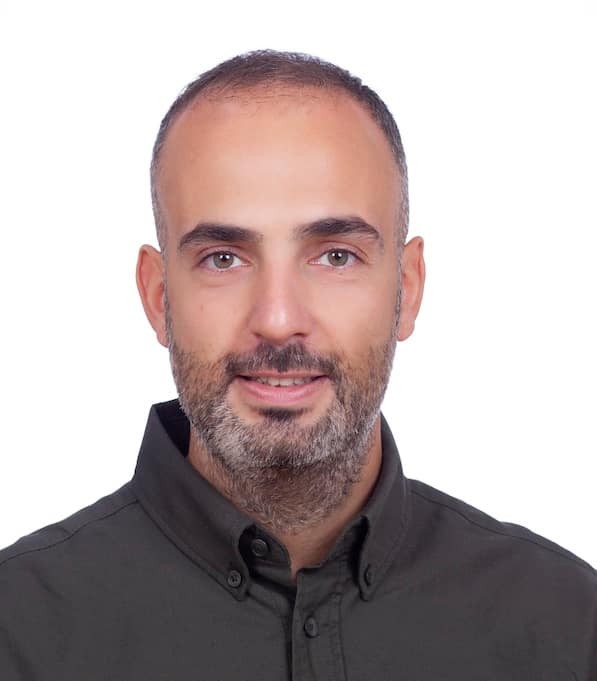
Roberto Giosa, PhD
Roberto Giosa is a postdoctoral researcher in sociology at the Universidad de Oviedo, Spain, where he works with the PROMEBI research group on street-level bureaucracy and inequalities in access to health services, with a principal focus on mental health and primary care. He is currently a visiting researcher at CHU de Québec–Université Laval, hosted by Professor Eve Dubé under an ESHMS Research Visit Grant.
E-mail: giosaroberto@uniovi.es roberto.giosa@crchudequebec.ulaval.ca
Technology usage statement
I have used:
- Paperpal to check for stylistic and grammatical mistakes.
- Zotero for creating references.